
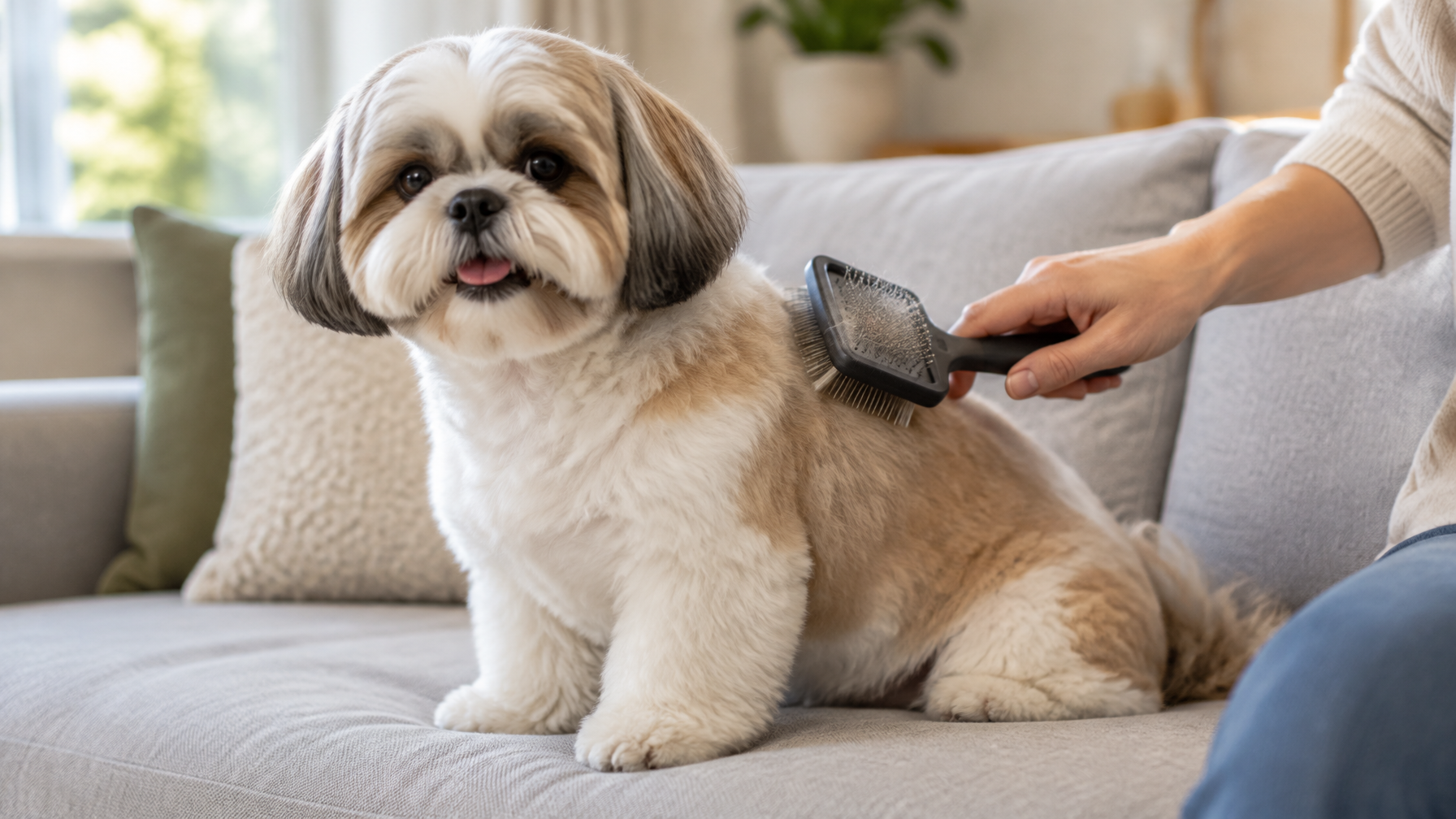
Yes, Shih Tzus shed, but very little ends up on your floor. They have a double coat that grows continuously, and loose undercoat hair gets trapped in the long outer coat instead of falling out. That’s why they’re called “low-shedding”, and why they mat if you don’t brush. But no dog is truly hypoallergenic: allergies come from proteins in dander, saliva and urine, not hair. A Shih Tzu may suit some allergy sufferers better than a heavy shedder, but it’s no guarantee.
- Sheds lightly; loose hair stays in the coat
- Trapped hair = mats without daily brushing
- Not hypoallergenic: no breed is
- Spend time with one before committing
- Sudden hair loss or bald patches = vet
“Do Shih Tzus shed?” is one of the first questions people ask before getting one, usually followed by “Are they hypoallergenic?” You’ll often see a confident “no” and “yes” online. Both answers are misleading.
The truth is more useful. Shih Tzus do shed, but their coat holds onto the hair, which changes how you care for it. And while they’re on most “good for allergies” lists, the science doesn’t support calling any breed hypoallergenic. Here’s what that means if you’re choosing a dog, or living with one.
01
Do Shih Tzus shed?
Yes, lightly. All dogs with hair shed some of it. A Shih Tzu has a double coat (a soft undercoat under a long outer coat) that grows continuously, so it loses hair gradually rather than in big seasonal “blowouts”. Most loose hair stays caught in the coat instead of landing on your sofa.
- A true double coat. The United Kennel Club breed standard describes the Shih Tzu as double-coated, with a “luxurious, dense coat” that is “long and flowing.”
- Continuous growth. PetMD notes the coat keeps growing, which is why most pet Shih Tzus are kept in a shorter cut.
- “Non-shedding” is a label, not a fact. The AKC uses the phrase “non-shedding coat that produces less dander” for allergy-friendly breeds, but also says no dog is 100% hypoallergenic. Every dog with hair loses some of it.
02
Why don’t you see much Shih Tzu hair around the house?
Because shed undercoat hair gets trapped in the long outer coat instead of falling out. That keeps floors and furniture cleaner, but the trapped hair tangles into mats if it isn’t brushed out.
This is the trade-off many first-time owners miss. A “non-shedding” dog sounds low-maintenance, but with a Shih Tzu the shedding still happens, just inside the coat. You remove that loose hair with a brush instead of a vacuum.
| What people expect | What actually happens |
|---|---|
| “Doesn’t shed” | Sheds lightly; loose hair is held in the coat |
| “Less work than a shedding dog” | Less vacuuming, more brushing |
| “Hair won’t be a problem” | Unbrushed trapped hair forms mats, often behind the ears, in the armpits and on the legs |
| “Hypoallergenic” | No breed is; allergy proteins come from dander, saliva and urine |
Our Shih Tzu grooming guide covers how to brush right down to the skin so trapped hair doesn’t turn into mats.
03
Do Shih Tzu puppies shed more?
Puppies shed little at first, but the soft puppy coat is replaced by the adult coat, often around 10–12 months, according to the AKC. During that change, more loose hair is caught in the coat, so mats can form much faster.
- Expect a tangly phase. Many owners find their puppy suddenly mats far more easily during the coat change. That’s the shed puppy coat getting caught in the growing adult coat.
- Brush more often during this stage, even daily, with gentle, short sessions.
- Consider a shorter cut. A puppy cut during the coat change makes brushing far easier. See our guide to Shih Tzu haircut styles.
Bringing a puppy home soon? Our new Shih Tzu puppy checklist covers the grooming tools and habits to start in the first weeks.
04
Are Shih Tzus hypoallergenic?
Not truly. The AKC says there are no 100% hypoallergenic dogs or breeds. Dog allergies come from proteins in dander (skin flakes), saliva and urine, not the hair itself. Low-shedding breeds like the Shih Tzu may spread less hair around, but there’s no guarantee they’ll trigger fewer allergy symptoms.
The Shih Tzu appears on the AKC’s list of breeds often suggested for people with allergies. Here’s what the evidence says:
- Allergens aren’t in the hair. The American Academy of Allergy, Asthma & Immunology (AAAAI) calls the idea that pet hair causes allergies a myth. The allergen is a protein in dander, saliva and urine. Hair just carries it around.
- “Hypoallergenic” breeds didn’t test lower. A 2012 study in the Journal of Allergy and Clinical Immunology tested hair and coat samples from 356 dogs. The breeds sold as hypoallergenic (Labradoodles, Poodles, Spanish Water Dogs, Airedales) actually had higher levels of the main dog allergen in their coats than the comparison dogs, which included Labradors. Airborne levels in homes were no different. The authors concluded there’s no evidence for calling any breed hypoallergenic. Shih Tzus weren’t in the study.
- People react differently. The AAAAI notes some people tolerate one dog or breed better than another, and some allergists think dogs that keep their coat year-round may suit allergy sufferers better, though it says there’s no real scientific proof.
Asthma or a severe allergy?Talk to an allergist before getting any dog, Shih Tzu included. Breed labels can’t predict how your body will react, and rehoming a dog later is hard on everyone.
Choosing a Shih Tzu puppy?
What to buy, the first week at home, vaccines and socialization, all in one checklist.
Read the new puppy checklist05
Can you live with a Shih Tzu if you have allergies?
Many people with mild dog allergies do, but test it first: spend real time with a Shih Tzu before committing, and talk to an allergist. Then cut exposure at home by keeping the dog out of the bedroom, using a HEPA filter, cleaning floors often and having someone without allergies do the brushing.
- Test before you commit. Spend several hours with Shih Tzus, ideally in a home setting, more than once. One short visit won’t tell you much.
- Make the bedroom a pet-free space. The AAAAI recommends this, plus washing bedding in hot water.
- Use a HEPA air purifier or filter to capture airborne dander, as the AAAAI suggests.
- Choose easy-clean floors and covers. The AAAAI suggests cleaning carpets often (or choosing wood or tile) and using washable covers on furniture and car seats.
- Let someone else brush. Texas A&M’s vet school suggests having a non-allergic person do the grooming. Brushing releases dander, so do it outdoors if you can.
- Keep the skin healthy. The AAAAI suggests asking your vet about a balanced diet to prevent dry skin, since flaky skin means more dander.
What about frequent bathing?Texas A&M suggests weekly baths to reduce allergens. A Shih Tzu typically does well with a bath every 1–3 weeks, so weekly can work, but use a gentle dog shampoo and conditioner and dry the coat fully to avoid dry skin. Our best shampoo for Shih Tzu tear stains roundup includes gentle body shampoos.
06
How do you manage a Shih Tzu’s loose hair?
Brush regularly with a small slicker brush and a metal comb, working down to the skin so trapped undercoat comes out before it mats. Always brush before a bath, and keep the coat in a length you can realistically maintain.
- Brush to the skin, not just the top. Line brushing (parting the coat and brushing section by section) removes loose undercoat. Finish with a comb to find hidden tangles. Our best brushes for Shih Tzus compares slickers, pin brushes and combs.
- Skip deshedding blades. Tools built for heavy-shedding breeds can cut and damage a Shih Tzu’s continuously growing coat.
- Brush before bathing. Water tightens mats, so remove loose hair first.
- Pick a practical cut. A short puppy or teddy bear cut holds less trapped hair and is much quicker to brush than a full coat.
07
When is Shih Tzu hair loss a problem?
Light, gradual shedding is normal. Bald patches, thinning coat, red or flaky skin, constant scratching or licking, or a sudden increase in hair loss are not, and need a vet check.
- Itching and redness can point to allergies, parasites or a skin infection.
- Patchy hair loss can have many causes, from skin infections to hormonal conditions. Only your vet can tell which.
- Mats can hide problems. Tight mats pull on the skin and trap moisture. If you find sore or broken skin under a mat, let your vet or groomer deal with it rather than cutting it out at home.
Our guide to common Shih Tzu health issues covers the breed’s main health risks and when to see a vet.
08
Shih Tzu shedding and allergy FAQs
Do Shih Tzus shed a lot?
No. Shih Tzus shed lightly, and most loose hair stays trapped in their long double coat instead of falling on the floor. That’s why they need regular brushing: the trapped hair forms mats if it isn’t brushed out.
Are Shih Tzus good for people with allergies?
They may suit some people with mild allergies better than heavy-shedding breeds, but no dog is truly hypoallergenic. Allergies come from proteins in dander, saliva and urine. Spend time with a Shih Tzu before committing, and talk to an allergist if you have asthma or severe allergies.
Do Shih Tzu puppies shed?
A little. The bigger change comes when the puppy coat is replaced by the adult coat, often around 10–12 months. During that change, more loose hair gets caught in the coat and mats form faster, so brush more often.
Does a haircut stop a Shih Tzu from shedding?
No. A shorter cut doesn’t stop shedding, but it holds less trapped hair, so loose hair is easier to brush out and mats are less likely. Never shave a Shih Tzu to the skin; leave at least an inch of coat.
Why is my Shih Tzu losing so much hair?
Light shedding is normal, and puppies lose more during the coat change around 10–12 months. Bald patches, thinning hair, itching, redness or a sudden increase in hair loss are not normal and need a vet check.
Sources
- Hypoallergenic Dogs (American Kennel Club)
- Pet Allergy (American Academy of Allergy, Asthma & Immunology)
- Can f 1 levels in hair and homes of different dog breeds: lack of evidence to describe any dog breed as hypoallergenic (Vredegoor et al., Journal of Allergy and Clinical Immunology, 2012)
- Best Pets for People with Allergies (Texas A&M College of Veterinary Medicine)
- Shih Tzu Breed Standard (United Kennel Club)
- Shih Tzu breed information (American Kennel Club)
- Shih Tzu breed guide (PetMD)
Update log
- : Published. Shedding and allergy information checked against the sources above.
This is general information, not veterinary advice. Consult your vet before making changes to your dog’s diet or care. For your own allergies, talk to an allergist.