
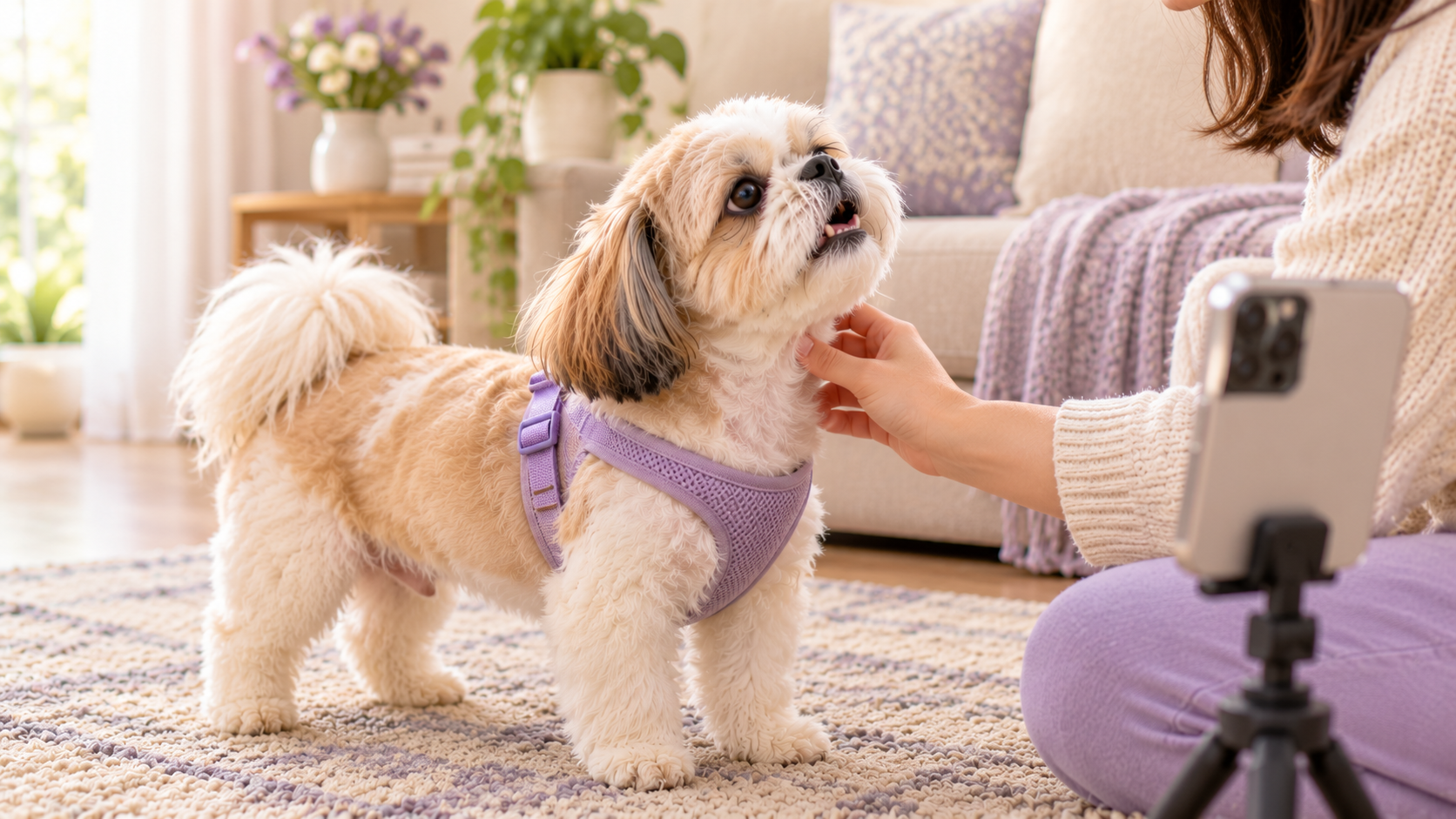
Reverse sneezing is a sudden, loud snorting as your Shih Tzu rapidly pulls air in through its nose, usually with its head and neck stretched out. It’s a reflex to clear irritation at the back of the nose or throat, and an episode usually lasts 30–60 seconds and is harmless. Shih Tzus are prone because of their small size and flat face. Stay calm, gently stroke the throat, and film it for your vet. See a vet if episodes are new, frequent or getting worse, or come with nasal discharge, coughing, trouble breathing or collapse.
- Usually harmless and over in under a minute
- Stay calm; gently stroke the throat
- Film an episode for your vet
- Use a harness, not a collar
- New, frequent or with other signs: vet visit
The first time a Shih Tzu reverse sneezes, many owners think their dog is choking or having an asthma attack. The honking and gasping is alarming, then it stops and the dog trots off as if nothing happened.
Most articles stop at “it’s harmless.” That’s usually true, but not always. Reverse sneezing can also be a sign of allergies, airway inflammation or something stuck in the nose, and it can be confused with tracheal collapse, a problem Shih Tzus are also prone to. This guide covers what’s normal, what isn’t, and what to do.
01
What is reverse sneezing in a Shih Tzu?
Reverse sneezing is a reflex in which a dog rapidly and repeatedly pulls air in through its nose, making a loud snorting or honking sound. Unlike a normal sneeze, which pushes air out, it pulls air in. Vets think it helps clear irritation at the back of the nose or throat.
- What it looks like: your dog suddenly stands still, stretches its head and neck forward, and makes rapid snorting breaths with its mouth closed.
- How long it lasts: PDSA says episodes tend to last 30–60 seconds.
- What happens next: your dog usually returns to normal straight away, with no lasting effects.
- What’s going on: Texas A&M’s veterinary college describes it as a muscle spasm where the back of the mouth meets the throat, which briefly narrows the opening of the windpipe.
02
Why do Shih Tzus reverse sneeze so often?
Small size and a flat face. PDSA notes small breeds reverse sneeze more than large ones, and flat-faced breeds, including Shih Tzus, are more likely to do it because they often have an overlong soft palate. In a survey of 779 dogs in Spain, Shih Tzus were among the most represented breeds.
- A long soft palate. Many brachycephalic dogs have extra soft tissue at the back of the throat, which can be irritated more easily. See our guide to common Shih Tzu health issues for more on brachycephalic airways.
- Small dogs are more affected. The 2023 Spanish survey found 52.9% of dogs had reverse sneezed, with toy dogs under 5 kg and small dogs of 5–14 kg more affected. A Shih Tzu falls in that range.
- Older dogs too. The same survey found dogs over 10 were more predisposed.
- A caveat: this was an owner survey in one region, so it shows a pattern, not a precise risk for your dog.
03
What triggers reverse sneezing in Shih Tzus?
Anything that irritates the nose or throat. PDSA lists pulling on the lead, overexcitement, dust, air fresheners, excess mucus, allergies, eating or drinking, and an overlong soft palate. Many Shih Tzus do it when they get excited at the door or pull against a collar.
| Trigger | Shih Tzu example | What helps |
|---|---|---|
| Pulling on the lead | Collar pressing on the throat on walks | A well-fitted harness |
| Overexcitement | Greeting you or visitors at the door | Calm, low-key arrivals |
| Irritants in the air | Air fresheners, perfume, scented grooming sprays, smoke, dust | Unscented products; ventilate after cleaning |
| Allergies | Seasonal pollen, house dust | Talk to your vet about allergy management |
| Eating or drinking | Gulping water after a walk | Small, calm drinks |
| Excess mucus | A cold or nasal infection | Vet check if discharge appears |
04
What should you do when your Shih Tzu reverse sneezes?
Stay calm and let it pass. Speak softly and gently stroke your dog’s throat or chest. Some vets suggest gently blowing on your dog’s face or offering water to encourage swallowing, which can end the spasm. If you can, film the episode on your phone for your vet.
- Stay calm. Your dog picks up on your stress, and excitement can make it last longer.
- Gently stroke the throat. Texas A&M’s Dr. Lori Teller suggests a soothing voice and gently massaging the throat.
- Encourage a swallow. Gently blowing on your dog’s face, or offering a drink once the episode eases, can help it swallow.
- Take off the collar if your dog was pulling against it.
- Film it. PDSA notes episodes are very unlikely to happen at the vet, so a video is the most useful thing you can bring.
Skip the nostril trickSome guides suggest briefly covering your dog’s nostrils to make it swallow. PDSA mentions that some owners do this, but a Shih Tzu’s nostrils are often already narrow, so we’d stick to throat stroking and blowing gently on the face. Some advice suggests pressing on the tongue; with a startled dog that risks a bite, so leave it to your vet.
Does your Shih Tzu pull on walks?
Harness picks that keep pressure off a flat-faced dog’s throat and airway.
See the best harnesses05
Is it reverse sneezing, tracheal collapse or something else?
Reverse sneezing is a loud snorting inhale through the nose with the mouth closed, lasting under a minute, followed by a normal dog. Tracheal collapse is a dry, harsh “goose honk” cough. Constant noisy breathing points to a brachycephalic airway problem. Choking means real distress that doesn’t stop. If you’re unsure, film it and call your vet.
| What you see | Likely cause | What to do |
|---|---|---|
| Sudden loud snorting in, head and neck stretched, mouth closed; normal within a minute | Reverse sneezing | Stay calm; film it; vet if frequent or new |
| Dry, harsh “goose honk” cough, worse with excitement, heat, a collar, or after eating or drinking | Possible tracheal collapse (VCA lists Shih Tzus among commonly affected breeds) | Vet visit; harness only; keep weight healthy |
| Snoring or noisy breathing much of the time, worse with exercise or heat | Brachycephalic airway problems | Vet assessment; avoid heat; see our hot weather guide |
| Pawing at the mouth, gagging, panic, can’t breathe, gums turning pale or blue | Choking or an airway emergency | Emergency vet now |
| Sudden sneezing fits, pawing at the nose, discharge from one nostril | Possible foreign body, such as a grass seed | Vet soon; don’t probe the nose |
| Coughing, nasal discharge, tiredness | Infection or airway inflammation | Vet visit |
06
When should you take a Shih Tzu to the vet for reverse sneezing?
See a vet if reverse sneezing starts out of the blue or later in life, happens often enough to affect your dog’s quality of life, gets more frequent or severe, or comes with nasal discharge, nosebleeds, coughing or breathing trouble. Get emergency care if your dog faints, collapses, or takes a long time to recover.
- New or changing episodes. PDSA and the vets quoted by Vetstreet advise a check if reverse sneezing starts suddenly, starts later in life, or becomes more frequent or severe.
- Other nose or chest signs: discharge (especially bloody or from one side), coughing, labored breathing, or a dog that seems unwell.
- Collapse or slow recovery after an episode needs urgent attention, PDSA advises.
- It’s not always “nothing.” In a study of 30 dogs referred to a Spanish veterinary hospital for reverse sneezing, 57% had inflammatory airway disease, 27% had anatomical or functional airway problems, and 10% had a foreign body in the nose or nasopharynx. Those were referred cases, so they’re more serious than average, but the authors concluded reverse sneezing should be treated as a possible marker of irritation worth investigating.
Your vet may examine the nose and throat, and in some cases recommend X-rays or a scope under anesthesia. Bring your video.
07
How can you reduce reverse sneezing in a Shih Tzu?
You can’t stop every episode, but you can cut common triggers: use a harness instead of a collar, keep greetings calm, avoid air fresheners, smoke and scented sprays, keep your dog at a healthy weight, and work with your vet on allergies or airway problems.
- Harness, not collar. This also protects a flat-faced dog’s airway and windpipe. See our best harness for Shih Tzus.
- Calm the doorway. If your dog reverse sneezes when excited at the door, our barking guide has steps for calmer greetings.
- Clean air. Skip plug-in air fresheners and aerosols near your dog, and choose unscented grooming products. Our grooming guide covers the routine.
- Healthy weight. Extra weight makes breathing harder for a flat-faced dog and worsens tracheal collapse, VCA notes. See our feeding guide.
- Keep cool. Heat and heavy panting add strain to a brachycephalic airway.
- Don’t medicate on your own. Ask your vet before giving antihistamines or any other medicine.
08
Shih Tzu reverse sneezing FAQs
Is reverse sneezing dangerous for a Shih Tzu?
Usually not. Most episodes last 30–60 seconds and your dog returns to normal straight away. But see a vet if episodes are new, frequent or worsening, or come with nasal discharge, coughing, breathing trouble or collapse.
How do I stop my Shih Tzu from reverse sneezing?
Stay calm, speak softly and gently stroke the throat. Gently blowing on the face or offering a drink after the episode eases can help your dog swallow. To reduce episodes, use a harness instead of a collar, keep greetings calm and avoid air fresheners and smoke.
Why does my Shih Tzu reverse sneeze when excited?
Excitement is a common trigger, along with pulling on the lead. Shih Tzus are prone because their flat face often comes with a long soft palate that’s easily irritated. Calmer greetings and a harness usually help.
What’s the difference between reverse sneezing and a collapsed trachea?
Reverse sneezing is a loud snorting inhale through the nose with the mouth closed, lasting under a minute. Tracheal collapse usually causes a dry, harsh “goose honk” cough, often with excitement, heat, collar pressure or after eating or drinking. Only a vet can tell for sure, so film it and book a visit.
Should I film my dog’s reverse sneezing?
Yes. Episodes rarely happen during a vet visit, so a short phone video is the most useful thing you can show your vet.
Sources
- Reverse sneezing in dogs (PDSA)
- Gesundheit! Reverse sneezing in dogs (Texas A&M College of Veterinary Medicine)
- What’s the deal with my dog’s weird reverse sneezes? (Vetstreet)
- Tracheal collapse in dogs (VCA Animal Hospitals)
- Survey research on reverse sneezing in 779 dogs in Southeast of Spain (Research in Veterinary Science, 2023)
- Reverse sneezing in dogs: observational study in 30 cases (Talavera et al., Veterinary Sciences, 2022)
Update log
- : Published. Health information checked against the sources above.
This is general information, not veterinary advice. Consult your vet before making changes to your dog’s diet or care.