
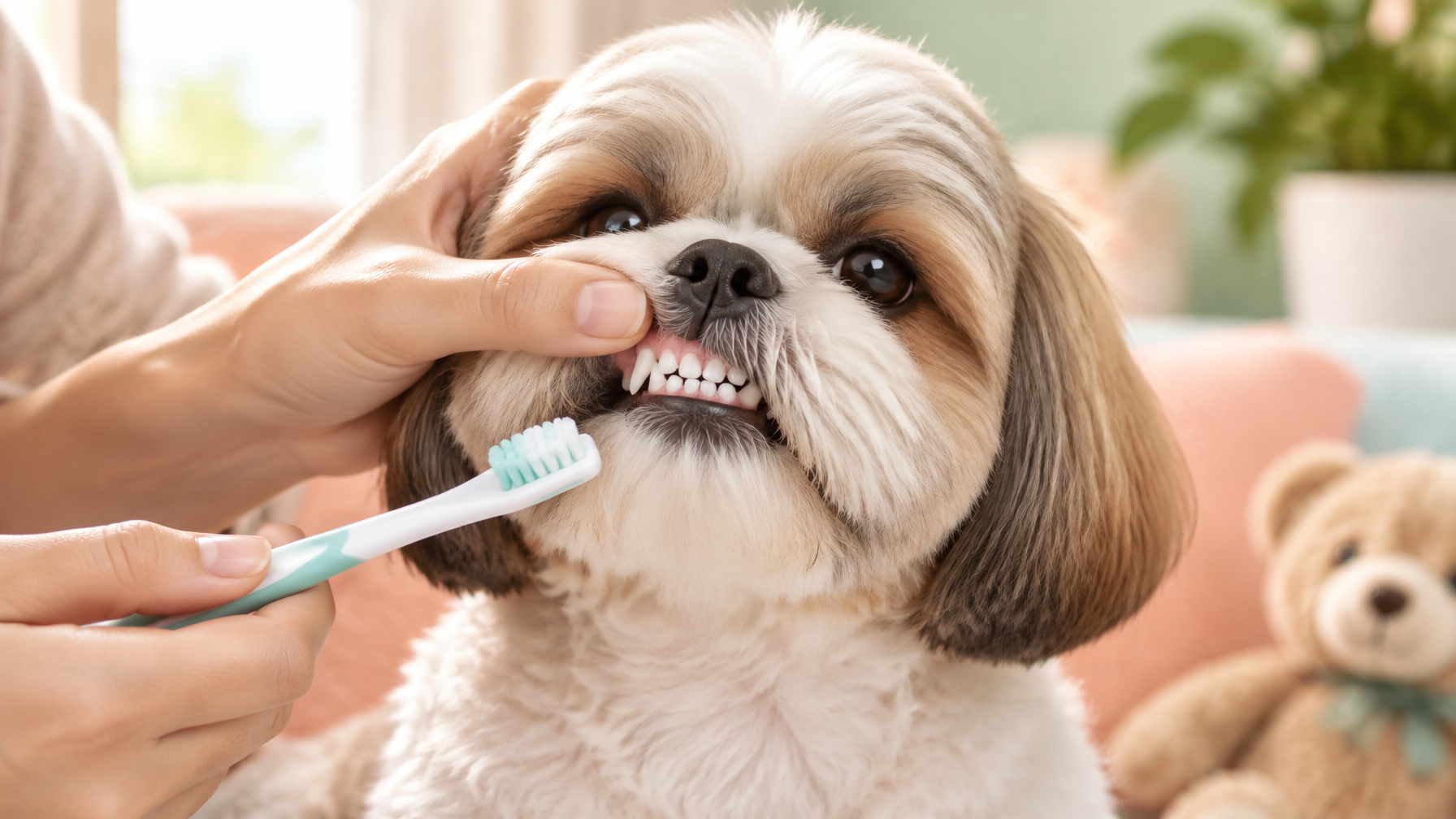
Shih Tzus are prone to dental disease because a small, short jaw crowds and rotates their teeth, trapping plaque. The best prevention is brushing daily with a soft brush and dog toothpaste (never human toothpaste), plus dental chews with a VOHC seal and a yearly vet dental check. Bad breath, red gums, brown tartar or dropping food are signs to see your vet.
- Brush daily, or at least several times a week
- Dog toothpaste only (xylitol risk)
- Look for the VOHC seal on chews
- Cleanings under anesthesia, not without
- Check puppies for retained baby teeth
Bad breath is easy to dismiss as “just dog breath,” but in a Shih Tzu it’s often the first sign of gum disease. The breed’s small mouth makes teeth crowd together, plaque builds up faster in the gaps, and by the time you see brown tartar, the problem has usually started below the gumline.
The good news: dental disease is largely preventable with a few minutes of care at home. This guide covers why Shih Tzus are prone to it, the warning signs, how to brush a reluctant dog’s teeth, which chews actually help, and when your vet needs to step in.
01
Why are Shih Tzus prone to dental problems?
A Shih Tzu’s short, flat-faced jaw leaves less room for its teeth, so they often crowd, overlap or sit rotated. Those tight spaces trap food and plaque, which hardens into tartar and leads to periodontal (gum) disease.
- Crowded and rotated teeth. The Merck Veterinary Manual notes that rotated teeth are described commonly in flat-faced (brachycephalic) breeds. Rotated and overlapping teeth create pockets that are hard to clean.
- Retained baby teeth. Merck notes that small breeds are overrepresented when baby teeth fail to fall out, leaving two teeth crammed into one space.
- Periodontal disease is common in all dogs. The AVMA calls it the most common dental condition in dogs and cats, and says that by around 3 years old, a pet will very likely show early evidence of it.
Gum disease isn’t just about teeth. The AVMA notes it’s associated with changes in the kidneys, liver and heart muscle. Our guide to common Shih Tzu health issues covers how dental problems fit into the breed’s overall health.
02
What are the signs of dental disease in a Shih Tzu?
Bad breath, yellow-brown tartar, red or bleeding gums, loose or broken teeth, dropping food or chewing on one side, and pawing at the mouth. See your vet if you notice any of these.
| What you notice | What it can mean | What to do |
|---|---|---|
| Bad breath | Plaque, tartar or gum infection | Check the teeth; book a vet dental check |
| Yellow or brown buildup | Tartar (calculus), which brushing can’t remove | Vet check; professional cleaning may be needed |
| Red, swollen or bleeding gums | Gingivitis or gum disease | See your vet |
| Dropping food, chewing on one side | Mouth pain | See your vet soon |
| Loose, broken or extra teeth | Advanced disease, a fracture, or retained baby teeth | See your vet |
| Swelling on the face or under an eye | Possible tooth root infection | See your vet promptly |
The AVMA also notes some pets become irritable when they have dental problems, and some dogs keep eating despite mouth pain, so don’t wait for your dog to stop eating.
The weekly lip-lift checkOnce a week, gently lift your Shih Tzu’s lips and look at the back teeth and gumline. Healthy gums are pink, not red, and teeth shouldn’t have brown crust near the gums. The beard can hide a lot, so part it with your fingers.
03
How do you brush a Shih Tzu’s teeth?
Use a soft, small toothbrush or finger brush and dog toothpaste. Lift the lips, angle the bristles at 45 degrees toward the gums, and brush the outside of every tooth with gentle back-and-forth strokes. Aim for daily.
The AVMA calls brushing “the single most effective thing you can do” to keep teeth healthy between vet cleanings. Daily is best, and several times a week still helps.
- Get dog toothpaste. Never use human toothpaste. VCA warns it may contain xylitol, which is toxic to dogs, and dogs can’t spit it out.
- Choose a small, soft brush. Colorado State University suggests a soft-bristle adult or child-size toothbrush, or a silicone finger brush. For a Shih Tzu’s small mouth, a child-size brush or finger brush is usually easiest.
- Start with taste only. Let your dog lick the toothpaste off your finger and reward them. Build up over 1–2 weeks, as CSU recommends, before brushing every tooth.
- Lift the lips so you can see the teeth and gumline. Part the beard if needed.
- Angle the bristles at 45 degrees toward the gums and brush back and forth with light pressure. CSU suggests about three strokes per tooth or section.
- Focus on the outside surfaces, especially the back teeth, which are easy to miss. CSU’s goal is the outside surfaces of all teeth.
- Take breaks and reward. Short sessions with treats keep it positive. You don’t need to do the whole mouth on day one.
Brushing won’t remove tartarBrushing removes soft plaque. Hard brown tartar that’s already there needs a professional cleaning. Start brushing right after a cleaning to keep the teeth clean.
Make it part of the routine.
Teeth, ears, eyes, nails and coat: the full Shih Tzu grooming routine in one place.
Read the Shih Tzu grooming guide04
Do dental chews and water additives work for Shih Tzus?
Some do, but they support brushing rather than replace it. Look for the VOHC Seal of Acceptance, which shows a product met standards for controlling plaque, tartar or both. Size chews to your dog’s weight and supervise chewing.
- Check for the VOHC seal. The Veterinary Oral Health Council reviews products for plaque and tartar control. The seal can cover plaque, tartar or both, so check which claim a product carries. The AVMA also warns that not every product marketed for dental health is effective.
- Size matters. VOHC advises matching a chew’s size to your dog’s body weight and only giving chews when you can watch your dog. For a 9–16 lb Shih Tzu, that usually means a small or “petite” size.
- Count the calories. Dental chews are treats, and Shih Tzus gain weight easily. Our Shih Tzu feeding guide shows how many treat calories fit in a day.
- Be careful with very hard chews. Hard items can break teeth, and a Shih Tzu’s crowded teeth are already under strain. Ask your vet which chews suit your dog.
- Dry kibble helps a little. PetMD notes dry kibble’s texture can remove some plaque, but it’s no substitute for brushing.
Want specific picks? See our best dental chews for Shih Tzus, all with the VOHC seal and in toy sizes.
05
Does a Shih Tzu need professional dental cleanings?
Yes, when your vet recommends it. Most dental disease is below the gumline, so a proper cleaning and exam are done under anesthesia, often with X-rays. The American Veterinary Dental College does not recommend cleanings without anesthesia.
The AVMA explains that anesthesia lets the vet clean and check below the gumline, take X-rays and avoid stress or injury. It notes anesthesia always carries some risk, but that risk is now very low, and most pets go home the same day. Ask your vet about pre-anesthetic bloodwork and how they monitor flat-faced breeds, since Shih Tzus need extra care with their airway.
Be wary of “anesthesia-free” cleaningsThey only scrape the visible tooth surface. The AVMA, quoting the American Veterinary Dental College, says they don’t allow cleaning or inspection below the gumline and can injure the pet. Clean-looking teeth can still hide disease underneath.
06
What should you know about Shih Tzu puppy teeth?
Start handling your puppy’s mouth early, and watch for baby teeth that don’t fall out. Merck notes small breeds are prone to retained baby teeth, which should be removed as soon as possible to avoid crowding the adult teeth.
- Start brushing habits young. A puppy that’s used to having its mouth handled is much easier to brush for life. Keep sessions short and fun.
- Check for double teeth. Once adult teeth come in, look for a baby tooth still sitting next to an adult tooth, often the canines (fangs). If you see one, tell your vet.
- Give safe teething toys. Soft, puppy-safe chew toys sized for a small mouth help during teething. See our new Shih Tzu puppy checklist.
07
Shih Tzu dental care FAQs
How often should I brush my Shih Tzu’s teeth?
Daily is best for a Shih Tzu, and several times a week still helps. The AVMA calls brushing the single most effective thing owners can do to keep teeth healthy between vet cleanings.
Why does my Shih Tzu have bad breath?
Bad breath in a Shih Tzu is often caused by plaque, tartar or gum disease, which are common in the breed because of crowded teeth. Have your vet check the mouth, especially if you also see red gums or brown tartar.
Can I use human toothpaste on my Shih Tzu?
No. VCA Animal Hospitals warns that human toothpaste may contain xylitol, which is toxic to dogs, and dogs swallow toothpaste instead of spitting. Use a toothpaste made for dogs.
Do dental chews replace brushing?
No. Dental chews can help reduce plaque or tartar, especially those with a VOHC seal, but brushing is still the most effective care for a Shih Tzu’s teeth. Size chews to your dog’s weight and count them as treats.
Is anesthesia-free teeth cleaning safe for Shih Tzus?
It’s not recommended. The American Veterinary Dental College does not recommend cleanings without anesthesia, because they can’t clean or check below the gumline, where most dental disease is, and can injure the dog.
Sources
- Pet Dental Care (American Veterinary Medical Association)
- How to Brush Your Dog’s Teeth (Colorado State University Veterinary Health)
- Can you brush your pet’s teeth with human toothpaste? (VCA Animal Hospitals)
- Congenital and Inherited Anomalies of the Teeth (Merck Veterinary Manual)
- Veterinary Oral Health Council: Seal of Acceptance (VOHC)
- Shih Tzu breed guide (PetMD)
Update log
- : Published. Dental care advice checked against the veterinary sources above.
This is general information, not veterinary advice. Consult your vet before making changes to your dog’s diet or care.