
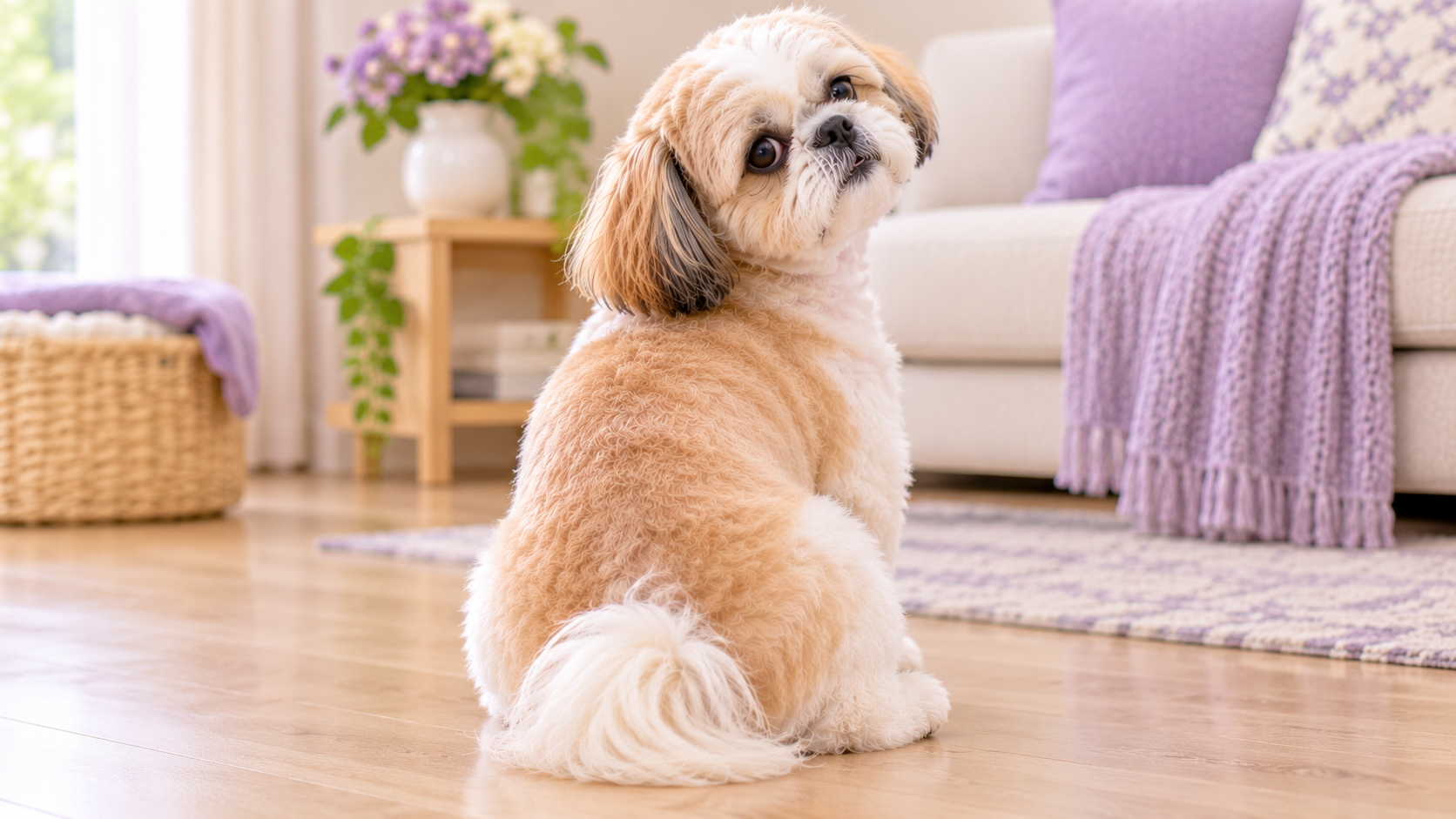
Anal glands (anal sacs) are two small scent sacs on either side of your dog’s bottom that normally empty when your dog poops. Shih Tzus are one of the breeds most prone to blocked anal glands: in a large UK study, about 7% of Shih Tzus had an anal sac problem in a single year. Signs include scooting, licking the rear, a fishy smell and straining. See your vet rather than squeezing them yourself; most dogs never need routine expression. Firm stools, a tidy hygiene trim and a healthy weight help.
- Shih Tzus are a higher-risk breed
- Scooting isn’t always glands: check the coat too
- Don’t express “just in case”
- Swelling, blood or pus: vet the same day
- Firm stools help glands empty
If your Shih Tzu drags its bottom along the carpet, you’re not alone. Anal sac problems are one of the most common reasons Shih Tzus see a vet in the UK. Yet most articles on the subject are generic, and many end with a step-by-step guide to squeezing your dog’s glands at home.
Veterinary organizations are more cautious. This guide covers what the research says about Shih Tzus, how to tell gland problems from the other common causes of scooting in a long-coated dog, when expression helps and when it does harm, and what actually reduces repeat problems.
01
What are anal glands in a Shih Tzu?
Anal glands, or anal sacs, are two small pouches under the skin on either side of the anus, at about the 4 and 8 o’clock positions. They hold a strong-smelling, oily fluid that dogs use for scent marking. Normally, firm poop presses on the sacs and empties a little fluid each time your dog goes.
- When they block: Cornell says impaction happens when the sacs don’t empty adequately. Risk factors include diarrhea, constipation, obesity and a low-fiber diet.
- What can follow: a blocked sac can become inflamed or infected (sacculitis), form an abscess, and even rupture.
- Usually treatable: Cornell describes the outlook for non-cancerous anal sac disease as good.
02
Are Shih Tzus prone to anal gland problems?
Yes. A Royal Veterinary College study of over 104,000 UK dogs found Shih Tzus had higher odds of anal sac disorders than crossbred dogs, and flat-faced breeds overall had more than twice the odds of long-nosed breeds. A separate 2024 study found anal sac impaction was the second most common disorder in UK Shih Tzus.
- Breed risk: O’Neill and colleagues (2021) found six breeds at increased risk compared with crossbreds: Cavalier and King Charles Spaniels, Cockapoos, Shih Tzus, Bichon Frises and Cocker Spaniels. The Shih Tzu’s odds were 1.66 times higher, and 6.93% of Shih Tzus were affected in one year.
- Flat faces: the RVC reported that flat-faced breeds such as the Shih Tzu had 2.6 times the risk of long-skulled breeds like Border Collies. Why isn’t known.
- Common in practice: Dale and colleagues (2024) found anal sac impaction in 7.4% of a sample of UK Shih Tzus in one year, second only to dental disease.
- Allergies may play a part: PDSA lists allergic skin disease among causes, and Shih Tzus are prone to skin allergies. See our Shih Tzu skin allergies guide.
03
What are the signs of blocked anal glands?
Scooting (dragging the bottom along the floor), licking or biting the rear, a fishy smell or discharge, straining or discomfort when pooping, and sensitivity when the back end is touched. Swelling, redness, blood, pus or a hole beside the anus suggest infection or an abscess.
| What you see | What it may mean | What to do |
|---|---|---|
| Scooting, licking the rear, fishy smell | Full or blocked glands | Book a vet visit |
| Straining or pain when pooping | Impaction or inflammation | Book a vet visit soon |
| Swelling or redness beside the anus | Infection or abscess forming | Vet the same day |
| Blood, pus or an open wound beside the anus | Ruptured abscess | Vet the same day |
| Lethargy, not eating, fever | Spreading infection | Vet the same day |
The O’Neill study found impaction in about 79% of cases, sacculitis (inflammation or infection) in 12% and abscesses in 9%. More than 1 in 10 cases needed pain relief, so this is a painful problem, not just an unpleasant one.
04
Is your Shih Tzu scooting because of its anal glands?
Not always. In a long-coated dog, scooting is often caused by poop stuck in the hair around the bottom, matted fur, itchy skin from allergies, or worms. Check the coat first, then see your vet if the scooting continues.
- Stuck poop or mats. Long hair around the anus traps feces and pulls on the skin. A short hygiene (sanitary) trim around the rear prevents this. The UKC breed standard allows trimming at the anus for neatness. See our grooming guide and haircut styles.
- Itchy skin. Allergies often make the rear itchy too.
- Worms. Tapeworm segments around the bottom can cause scooting; ask your vet about deworming.
- Diarrhea irritates the skin and stops the glands emptying. See your vet if it lasts more than a day or two.
Quick checkLift the tail in good light. Look for dried poop, mats, redness or swelling. Clean, trim or brush out what you can, and if scooting continues for more than a day or two, or you see swelling, call your vet.
05
Should a Shih Tzu’s anal glands be expressed regularly?
Not unless your vet recommends it. PDSA says that if a dog has never shown signs of an anal gland problem, there’s no need to have them examined or emptied. For dogs with recurring problems, Cornell says a vet may recommend checking and expressing them periodically.
- No “just in case” squeezing. One industry code of practice for groomers states that routine expression at every groom is not indicated, because some dogs never have problems.
- Don’t try it at home without training. PDSA advises never emptying your dog’s glands yourself unless your vet has shown you how, because squeezing them incorrectly can cause serious problems.
- Groomers: many groomers only express externally, and some veterinary regulators, such as the College of Veterinarians of British Columbia, have said groomers should only do it that way. It’s reasonable to ask your groomer not to express your Shih Tzu’s glands unless you or your vet have asked.
- Why a vet check is worth it: an AKC-quoted veterinarian notes anal gland tumors are often found during routine anal gland expression, and they don’t always cause obvious signs.
- Recurring problems: if your vet does recommend regular expression, ask how often, and whether there’s an underlying cause such as allergies or soft stools.
Itchy rear and itchy paws?
Allergies can affect the skin and anal glands. How vets work out the cause, and what helps.
Read the skin allergies guide06
How do vets treat anal gland problems?
Most cases are treated by the vet gently emptying the glands. Infected glands may be flushed and treated with antibiotics and pain relief; abscesses may need draining. For dogs with severe, repeated problems, surgery to remove the sacs is an option, but it carries risks.
- Emptying: in the O’Neill study, 95% of cases were treated by manual emptying.
- Medication: about 20% of cases received antibiotics and 12% pain relief.
- Flushing: PDSA notes some dogs need the glands flushed under sedation or anesthesia.
- Surgery: fewer than 1% of cases had the sacs removed. Cornell notes the risks of infection and fecal incontinence must be weighed.
07
How can you prevent anal gland problems in a Shih Tzu?
Aim for firm, well-formed stools, keep the hair around the rear trimmed short, treat diarrhea and skin allergies promptly, keep your dog at a healthy weight, and ask your vet before adding fiber. Don’t have healthy glands expressed routinely.
- Firm stools. PDSA says a higher-fiber diet can firm up stools and help the glands empty, and Cornell says adding fiber can help. Ask your vet how much and what type; don’t change diets in a hurry. See our feeding guide.
- Hygiene trim. Keep the hair around the anus short so poop doesn’t stick and you can spot problems early.
- Weight. PDSA says overweight dogs are more prone because of weaker muscles around the anus. The large O’Neill study didn’t find a clear link with obesity, but a healthy weight helps a Shih Tzu in many other ways.
- Treat the triggers. Diarrhea and allergic skin disease are common triggers. Getting those under control often reduces gland flare-ups.
- Exercise. Regular activity supports healthy digestion. See our exercise guide.
08
Shih Tzu anal gland FAQs
Do Shih Tzus need their anal glands expressed?
Most don’t need routine expression. Shih Tzus are more prone to anal gland problems than many breeds, but PDSA says a dog that has never had a problem doesn’t need its glands examined or emptied. If your Shih Tzu has repeated problems, your vet may recommend periodic expression.
Why does my Shih Tzu keep scooting?
Full or blocked anal glands are a common cause, but in a long-coated dog, poop stuck in the hair, matted fur, itchy skin and worms can also cause scooting. Check and clean the area, keep a short hygiene trim, and see your vet if it continues.
How do I know if my Shih Tzu’s anal glands are infected?
Swelling or redness beside the anus, pain, blood or pus, a bad smell, or an open wound suggest infection or an abscess. Your dog may also be lethargic or off food. See your vet the same day.
Can I express my Shih Tzu’s anal glands at home?
Only if your vet has shown you how and recommends it. PDSA warns that squeezing the glands incorrectly can cause serious problems, and a vet check can also pick up problems such as anal gland tumors.
Does fiber help anal gland problems?
It can. PDSA and Cornell both say more fiber can help by firming up stools so the glands empty naturally. Ask your vet what type and how much to add for your dog.
Sources
- Non-neoplastic anal sac disorders in UK dogs (O’Neill et al., Veterinary Record, 2021)
- Ground-breaking RVC research explores prevalence of anal sac disorders in dogs (Royal Veterinary College)
- Study summary (RCVS Knowledge)
- Demography, common disorders and mortality of Shih Tzu dogs under primary veterinary care in the UK (Dale et al., Canine Medicine and Genetics, 2024)
- Anal sac diseases (Cornell Riney Canine Health Center)
- Blocked anal glands in dogs (PDSA)
- How to express dog anal glands (American Kennel Club)
Update log
- : Published. Health information checked against the sources above.
This is general information, not veterinary advice. Consult your vet before making changes to your dog’s diet or care.