
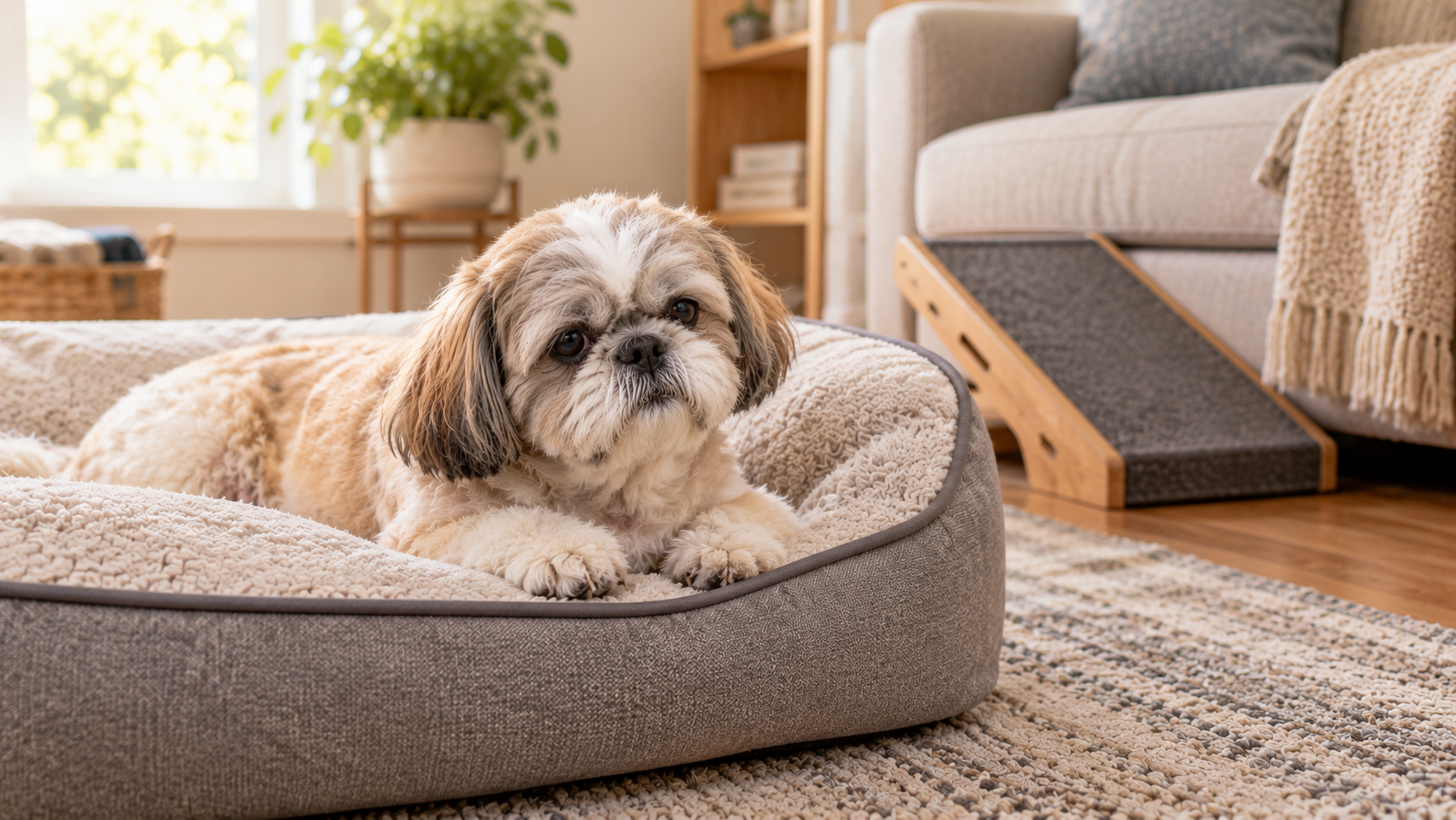
A Shih Tzu typically becomes a senior around 9–10 years old; the AAHA defines a senior dog as one in the last quarter of its expected lifespan. From then on, plan vet checkups once or twice a year with bloodwork, watch for hidden pain, weight and muscle changes, eye problems and signs of dementia, keep dental care going, and adapt your home with non-slip floors, ramps and shorter grooming sessions. Older Shih Tzus also cope less well with heat, so keep them cool.
- Senior from about 9–10 years
- Vet checks once or twice a year
- Learn the quiet signs of pain
- Watch for dementia (DISHAA) signs
- Non-slip floors, ramps, cool rooms
Shih Tzus are one of the longer-lived toy breeds, and many reach their teens. That’s wonderful, but it means a big part of your dog’s life is spent as a senior, and the changes are easy to miss. A Shih Tzu that sleeps more, skips the sofa jump or seems “grumpy” is often not just getting old. It may be in pain, losing vision, or showing early signs of dementia, and many of those things can be treated.
Most senior Shih Tzu articles online are undated, unsourced or built around selling a supplement. This guide is based on the AAHA’s 2023 senior care guidelines for vets, plus breed-specific risks for a flat-faced, long-coated toy dog.
01
At what age is a Shih Tzu considered a senior?
Usually around 9–10 years old. The AAHA defines a senior dog as one in the last 25% of its estimated lifespan. With Shih Tzus commonly living into their early-to-mid teens, that lands around 9–10, though dogs with health problems may age sooner.
- The AAHA rule. Rather than a fixed age, the AAHA’s guidelines (based on its canine life stage guidelines) treat a dog as senior from the last quarter of its expected lifespan.
- Shih Tzu lifespan. PetMD puts the typical range at 10–18 years. A large 2024 UK study in Scientific Reports found small breeds with longer noses tended to live longest, and some flat-faced breeds had a higher risk of early death, so a Shih Tzu’s own health matters more than averages.
- Your vet’s view counts most. A fit 11-year-old may be “younger” than a 9-year-old with heart or breathing problems. Ask your vet to note when your dog moves into senior care.
Our guide to common Shih Tzu health issues covers the breed’s main risks at every age.
02
How often should a senior Shih Tzu see the vet?
Once or twice a year, as the AAHA guidelines suggest, with diagnostic tests your vet recommends, usually blood and urine tests. Every visit should include a mouth check. Bring a list of any changes you’ve noticed, plus every medication and supplement your dog takes.
- Regular workups. The AAHA recommends a “once- or twice-yearly medical workup” with diagnostic tests for senior dogs.
- Mouth checks every time. The AAHA notes senior pets have higher dental risk, and that fixing mouth problems can greatly improve quality of life.
- List all medications and supplements, including any cannabis products, to avoid drug interactions, as the AAHA advises.
- Film mobility problems. The AAHA encourages vets to use videos and checklists to assess mobility. A short clip of your dog on the stairs or getting up is very helpful.
Keep a simple change logOnce a month, note your Shih Tzu’s weight, appetite, water intake, energy, sleep and any accidents. Gradual changes are hard to remember but easy to spot on paper, and they’re exactly what your vet will ask about.
03
How do you know if a senior Shih Tzu is in pain?
Pain in older dogs is often quiet: reluctance to jump onto the sofa or use stairs, stiffness after resting, slower walks, licking a joint, irritability when touched, or sleeping more. The AAHA notes owners often miss these signs, so don’t put them down to “just old age.”
- Watch for changes, not cries. Most dogs don’t whimper with chronic pain. They simply do less.
- Grooming can reveal it. A Shih Tzu that suddenly resents being brushed or having its back legs handled may be sore, not stubborn.
- Treatment has many parts. The AAHA describes a “multimodal” approach that can include medication, weight management, rehabilitation and home changes. Never give human pain medication, which can be dangerous for dogs.
- Weight is a pain treatment. Extra pounds strain joints and a flat-faced dog’s breathing. Our Shih Tzu feeding guide covers portion control.
04
What are the signs of dementia in an older Shih Tzu?
Vets use the DISHAA checklist: Disorientation (getting stuck or lost), changed Interactions, Sleep-wake changes (pacing at night), House soiling, Activity changes, and Anxiety. Early treatment works better, so mention any of these to your vet.
| DISHAA sign | What it can look like in a Shih Tzu |
|---|---|
| Disorientation | Getting stuck behind furniture or in corners, staring at walls, waiting at the hinge side of a door |
| Interactions | Less interested in family, or suddenly much clingier or more irritable |
| Sleep-wake changes | Sleeping more by day, pacing or barking at night |
| House soiling | Accidents in a dog that was reliably trained |
| Activity | Aimless wandering or pacing, or much less play |
| Anxiety | New fear, restlessness or distress when left alone |
- It becomes more common with age. PetMD cites a study finding cognitive dysfunction in 28% of dogs aged 11–12 and 68% of dogs aged 15–16.
- Rule out other causes. House soiling can also come from urinary or kidney problems, and confusion from vision loss. Your vet will check.
- It can be managed. The AAHA lists selegiline (a prescription medication for dogs), diet and enrichment as options. PetMD notes cognitive dysfunction is “managed rather than cured.”
- Keep the brain busy. Short sniffing games and food puzzles suit a senior toy dog. See our best toys for Shih Tzus.
If a senior dog suddenly can’t cope alone, see our Shih Tzu separation anxiety guide too: aging is one recognized trigger.
Know the breed’s health risks.
Breathing, eyes, teeth, ears and knees: the signs to watch and when to see a vet.
Read the Shih Tzu health guide05
What senior health problems are specific to Shih Tzus?
Eyes, teeth, breathing and heat tolerance need extra attention in an older Shih Tzu. Inherited eye conditions such as cataracts and dry eye become more noticeable, crowded teeth keep accumulating disease, and older flat-faced dogs cope worse with heat.
- Eyes. PetMD lists inherited glaucoma, dry eye and cataracts in the breed, and Cornell lists the Shih Tzu among breeds prone to dry eye. Cloudiness, squinting, thick discharge or bumping into things all need a vet check. See our Shih Tzu eye care guide.
- Teeth. Small, crowded mouths keep building dental disease over the years. The AAHA states that senior pets “can safely undergo multiple anesthetic events” with careful planning, and that dental work needs X-rays and anesthesia. Age alone isn’t a reason to skip a needed cleaning; for a flat-faced dog, ask your vet how they manage the airway. See our Shih Tzu dental care guide.
- Heat. In the VetCompass study of over 900,000 UK dogs, dogs aged 12 and over had about three times the odds of heat illness from hot weather compared with dogs under 2. For a flat-faced senior, keep summers cool. See our Shih Tzu hot weather guide.
- Breathing. Noisier breathing, coughing or tiring very quickly can come from airway changes or other illness. Tell your vet about any new breathing change.
- Ears and skin. Keep up weekly ear checks; see our Shih Tzu ear care guide. Report new lumps or bumps you find while grooming.
06
What should you feed a senior Shih Tzu?
A complete and balanced food that keeps your dog at a healthy weight, in portions adjusted for lower energy needs. There’s no single “senior” standard, so the right food depends on your dog’s weight, muscle, teeth and any health conditions. Ask your vet before switching.
- Energy needs often drop. The AAHA notes maintenance energy needs generally decline in aging dogs. If your Shih Tzu is less active, portions usually need trimming.
- Watch muscle, not just weight. The AAHA recommends tracking muscle condition as well as body condition, because older dogs can lose muscle even when their weight looks stable. Thin back legs or a bony spine are worth mentioning to your vet.
- “Senior” on the label isn’t standardized. AAFCO doesn’t have a separate senior nutrient profile, so senior foods vary a lot. Compare calories per cup and ask your vet.
- Dental comfort. If chewing kibble becomes hard, soaking it or adding wet food can help, but get the mouth checked first: reluctance to chew is often dental pain.
- Unexplained weight loss always needs a vet visit.
Our best dog food for Shih Tzus compares calories per cup across small-bite foods.
07
How should grooming, exercise and your home change for an older Shih Tzu?
Keep grooming in shorter sessions on a non-slip surface, choose an easy-care haircut, walk more gently but keep walking, and make the home safer with traction rugs, ramps, night lights and a supportive bed.
Grooming
- Short, frequent sessions. Standing for a long brush-out is tiring for stiff joints. Brush a little each day, with your dog lying down if that’s more comfortable.
- Pick a practical cut. A short puppy or teddy bear cut means less brushing and easier hygiene. See our guide to Shih Tzu haircut styles.
- Nails grow longer. Less activity means less natural wear, and long nails make slipping more likely. See how to trim Shih Tzu nails.
- Keep pad hair short for better grip on hard floors.
Exercise
- Keep moving, gently. Shorter, slower walks in the cool part of the day, plus sniffing games indoors. Our Shih Tzu exercise guide covers adjusting by age.
- Use a harness, never a collar, to protect a flat-faced dog’s airway.
Home changes
- Traction. The AAHA suggests traction flooring; runner rugs on slippery floors are an easy start.
- Ramps or steps for the sofa, bed or car, so your dog doesn’t jump. See our best dog ramps and steps.
- Light and quiet. The AAHA also suggests reducing light and noise stress; night lights help a dog with poorer vision or night-time confusion.
- A supportive bed in a warm, quiet, draft-free spot that’s still cool in summer. See our Shih Tzu cooling mat picks for hot spells.
- Keep furniture where it is, so a dog with fading vision can still find its way.
08
How do you judge quality of life in an elderly Shih Tzu?
Look at the basics every day: is your dog eating, drinking, comfortable, able to move and toilet, and still enjoying things? Ask your vet for a quality-of-life checklist, which the AAHA recommends vets provide, and talk early about comfort (palliative) care so decisions aren’t made in a crisis.
- Track good and bad days. A simple calendar marking good and bad days makes trends clear.
- Comfort care is real care. The AAHA encourages vets to discuss palliative and hospice care. Pain relief, easy-to-reach food and water and a comfortable bed can make a big difference.
- Plan ahead. Talking with your vet about end-of-life options before you need them is hard, but it means you can focus on your dog when the time comes.
This section is general information. Every dog is different; your vet knows yours best.
09
Senior Shih Tzu care FAQs
At what age is a Shih Tzu a senior?
Usually around 9–10 years old. The AAHA defines senior dogs as those in the last 25% of their expected lifespan, and Shih Tzus commonly live into their early-to-mid teens. Dogs with health problems may need senior care sooner.
How long do Shih Tzus live?
PetMD puts the typical Shih Tzu lifespan at 10–18 years. A healthy weight, good dental care, keeping cool in hot weather and regular vet checkups all help.
How often should a senior Shih Tzu go to the vet?
Once or twice a year, as the AAHA guidelines suggest, with blood and urine tests if your vet recommends them. Go sooner for any new symptom, such as weight loss, drinking more, coughing, accidents or confusion.
What are signs of dementia in an old Shih Tzu?
Getting stuck in corners, changed interactions with family, pacing or barking at night, new house soiling, aimless wandering and new anxiety. Vets call these the DISHAA signs. Early treatment works better, so tell your vet.
Should my senior Shih Tzu eat senior dog food?
Not necessarily. There’s no separate AAFCO senior standard, so senior foods vary. What matters is a complete and balanced food in portions that keep your dog at a healthy weight and muscle condition. Ask your vet before switching.
Sources
- 2023 AAHA Senior Care Guidelines summary (American Animal Hospital Association)
- Dementia Symptoms in Dogs (PetMD, Melissa Boldan, DVM)
- Shih Tzu breed guide (PetMD)
- Keratoconjunctivitis Sicca (KCS) in Dogs (Cornell University)
- Dogs Don’t Die Just in Hot Cars (Hall, Carter & O’Neill, Animals, 2020)
- Expected life spans of UK dog breeds (Science News, on McMillan et al., Scientific Reports, 2024)
Update log
- : Published. Senior care advice checked against the sources above.
This is general information, not veterinary advice. Consult your vet before making changes to your dog’s diet or care.